Articles Tagged with

What is your number one goal or vision for your business or your role? You have to know this before you decide what actions to take. If you don’t, it’s time to do some thinking about the future.
Consider the five core elements of vision:
Clarity, Purpose, Values, Goals, and Strategy-to help guide your thoughts.
Once you have that big picture, it’s time to break your vision down into milestones. What has to happen first? That step becomes your first milestone.
Understanding Milestones
I don’t have a formal business degree, but I have successfully managed large projects and events by relying on practical resources like Project Management for Dummies. You don’t need a background in corporate business to understand how to move a project forward.
Think of building a house. It is the perfect example of how milestones work. A milestone is simply a marker or a specific moment in time—like a freeze-frame during your project when you finish one segment and move to the next.
When you build a house, the steps look like this:
- Milestone 1: Acquiring and purchasing the land.
- Milestone 2: Choosing a contractor.
- Milestone 3: Digging and pouring the foundation.
- Milestone 4: Framing the structure (when the house finally looks like a skeleton).
- Milestone 5: Putting up the shell with plywood and installing the roof.
Milestone after milestone is accomplished until the project is complete and you finally move in.
While we aren’t building physical houses here, we are building sustainable businesses that generate cash flow, attract clients, or create useful products.
What If Your Vision Feels Too Big?

What happens if your vision is so massive that you either don’t know where to start, or you feel so daunted by it that you keep procrastinating?
If you feel this way, you are not alone. As a time coach, I work with many clients who want to accomplish big things but struggle to get started, or find it hard to keep going once they realize how much time the journey will take.
Remember this quote:
by Earl Nightingale
“Never give up on a dream just because of the time it will take to accomplish it. The time will pass anyway.”
It is incredibly easy to talk yourself out of doing something meaningful by making excuses. But the truth is simple: if you get started today, one or two years from now you will have something amazing to show for it. You will have something to be proud of.
How to Finally “Get Around to It”
The best way to conquer procrastination is to break a massive project down into smaller, bite-sized chunks.
Take my client, Kaye. As a new business owner, she knew that many startups fail, and she rightly believed that a detailed business plan would help make her new pet-training business a success. When she first called me, she had been trying to write her business plan on her own for nine months.
Every day, Kaye would sit down at her computer to work. But without a structured plan, she would get distracted by exciting ideas and spend hours researching them on the internet. Two hours would pass, and she would have zero progress to show for it.
Realizing she needed help to stay focused, she used her excellent research skills to find me. Together, we built strategies to keep her highly focused for short periods of time. The results were incredible. After just two months of working together, her robust business plan was fully finished!
- Watch Kaye’s full success story on my YouTube Channel here!
How Time Coaching helped a new business owner Rock it!
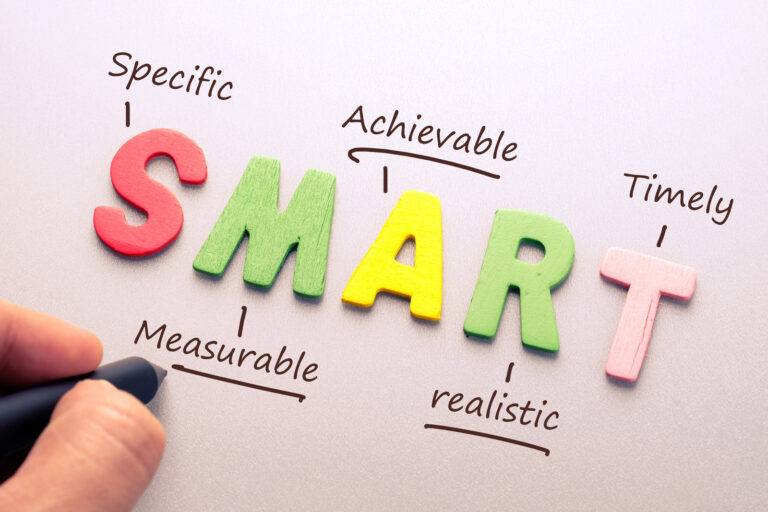
Use the SMART Framework
As you work toward your vision, it is excellent practice to filter your milestones through SMART goals. I regularly check my long-range projects against these criteria to ensure they are both realistic and exciting enough to keep me motivated:
- Specific: Clear and defined.
- Measurable: Tracks your progress.
- Achievable: Attainable and realistic.
- Relevant: Aligns with your overarching vision.
- Time-bound: Has a clear deadline.
Which of these elements can you apply to your vision today?
Build Your Support System
How do you plan to stay on track? If you don’t have a plan yet, I highly recommend checking out my previous blog posts on motivation, planning, and building habits.
Another highly effective strategy is to seek out external support. Depending on your needs, support might look like:
- An accountability buddy
- A professional coach
- A trusted mentor
If I can offer one final piece of advice: I know you are excited and want to achieve everything right now. However, it is much wiser to focus on one single thing at a time instead of fracturing your attention.
In his bestselling book Atomic Habits, James Clear highlights the danger of trying to change too much at once. He notes:
“You don’t rise to the level of your goals. You fall to the level of your systems.”
Reaching for your vision is significantly more rewarding when you have the right systems—like good habits, a clear plan, and strong support—in place. My hope for you is that you find exactly what you need this week to bring your biggest dreams to life!
Resources:
Helpful links to my previous articles about SMART goals, planning and habits.