Schedule a Free Call
Category

Uncategorized

What Does it Take to Become an Executive Coach?

Many people ask me about the difference between an executive coach and a life coach. There’s a surprising amount of confusion about the difference; most people think that all coaches are about the same.

My goal here is to make a distinction between the two kinds of coaches by informing you what a typical life coach training is like vs. the intensive training an executive coach participates in.

First, most life coaches I know do not have a certification with the ICF, the International Coaching Federation. This is the most well-known, well-respected and universally accepted accreditation entity in the world.

And for the most part, life coaches participate in a short training or even no training before they start practicing and coaching people. That being said, I know some good life coaches whose professions, life experience, and compassion have uniquely prepared them to be a coach. It’s in your best interest to find out what training someone has had before engaging them. Be in the know!

With executive coaching, the picture looks pretty different. To get my ICF accreditation as a level 1 ACC coach, I participated in 78 hours of instruction, peer coaching and mentor coaching, and am required to coach clients for 100 hours before taking the final accreditation exam.

On a more personal note,

Some of you who know me as a professional organizer may wonder: Why did Jenny switch from organizing to coaching?

It’s simple (but not easy). My body made the choice for me. In 2023, my left shoulder wore out and I had shoulder surgery and a lengthy, painful recovery (as anyone who has had shoulder surgery knows well).

When I realized I could no longer organize for clients full time, I started looking into what to do next. Would I go into project management? Real estate? Executive coaching? Those were my top choices.

Though project management was appealing and real estate lucrative, in the end I decided my desire and talents were most aligned with executive coaching. As a professional organizer, I essentially already coached them to a better, less cluttered lifestyle, and in each session I taught them the organizing method I used. Then they could replicate that when our project was finished, and hopefully benefit from it for the rest of their lives.

That kind of transformation is one of the great payoffs of being a professional organizer, and the main reason I stuck with it for 18 years. I knew, from hearing many transformation stories from coaches and their clients, that coaching would be the way to go.

The next hurdle: picking a coaching program.

Of course I created a spreadsheet!

I narrowed it down to 3 programs that stood out. (I won’ t mention the names of the other coaching programs.) Suffice it to say, after investigating all 3 of them, I talked with someone at each program. One crucial phone call decided it.

So when I got on the phone with an executive coach at Coach U and she coached me through a sticky situation with an executive I was working with at the time, I realized Coach U was the program for me. Any organization which could produce a coach that good was one I wanted to be part of.

Phase 1: Education & Training

The program was intense. Basically, we spent six 10-hour days in coaching instruction with our group (about 12 participants). They asked us to clear our schedule, which I did.

Since I had just undergone shoulder surgery, I made a pretty ridiculous picture with an ice pack on one shoulder a lot of the time. I looked like a lopsided football player, or 80s fashion gone awry, with shoulder pads only on one side.

I have to say, though the Core Essentials coaching classes were intense.

Our two instructors, seasoned coaches with 50 years of combined experience, warned us that we would feel strong emotions at times because to become a coach you have to dig deep inside yourself. Often, in the class exercises, you face some fears or beliefs that you may have been avoiding for a long time. This can cause some painful feelings to surface (which is why many people avoid deep reflection).

I thought, no sweat. There aren’t any skeletons in my closet, I’m a well-balanced person. I don’t cry easily, and I am strong. But they were right! I laughed, I cried at times, some old pains came out as I was coached by my classmates and the instructors, and the strong emotions surprised me.

Needless to say, we all grew as individuals and we learned what good coaching could do for a person. The support was amazing. The camaraderie felt great, especially for me to be a part of everyone else’s coaching journey.

And by the end of that intensive 6 days, we started meeting once a week to build on our training.

Coach U Core Essential curriculum

The Core Competencies: Empowering the World Through COACHING

  1. Demonstrates ethical practice
  2. Embodies a coaching mindset
  3. Establishes and maintains agreements
  4. Cultivates trusts and safety
  5. Maintains presence
  6. Listens actively
  7. Evokes awareness
  8. Facilitates client growth

Phase 2: Coaching REAL Clients

I say this a bit tongue-in-cheek because we joked about it with each other in class. We had coached each other plenty of times, so it felt a little scary to go out and find clients of our own.

The Coach U model, similar to other coaching programs, encouraged us to do 20 hours of pro-bono or free coaching for the first 20 hours. Which all of us did, I am sure.

It took me a month or two to accomplish this; I wanted to find people who needed me, not just take the easy road and coach family or friends.

I ended up coaching the young executive director of a nonprofit called Tidey Ocean, my massage therapist (a new business owner), and a college student doing her student teaching (and only getting 4 to 5 hrs of sleep when we commenced). I also coached with a life coach I knew, and did some peer coaching with a great executive coach from Chicago who I met through a coaching FB group.

By the way, we had some great results. The college student managed better and got 7 hours of sleep per night when we finished, the massage therapist got really good at boundaries, and the nonprofit director learned how to be a better leader and do what mattered to move the needle. He received 2 very large grants as a result!

Once I had 20 hours of experience, I took the Coach U final exam and submitted a video of a real coaching session. Several coach U educators reviewed my tape and approved it. This means I landed on the core elements of a coaching session: the session agreement followed by these elements.

  • Listening
  • Questioning
  • Acknowledging
  • Sharing Observations
  • And I partnered with my client to bring clarity, focus, exploration and design.

At the end of the session, I confirmed learning and progression, then wrapped up by asking what they wanted to be accountable for, IDing any obstacles, and expressing confidence in them.

After my 20 hours of pro-bono coaching and passing the final, I needed to find paying coaching clients, which I thought would be easier after we had done a whole unit on starting our business. Marketing has never been my strong suit, and I am still figuring it out.

I have found some great resources for marketing myself as a coach, which I will link to at the end of this article.

That was when I started speaking to groups more, networking, and re-engaging in social media like Facebook and Linkedin to let the world know I’m a coach now!

Phase 3: The final stretch in coaching journey

Here I am in my final stretch. I have 11 hours of coaching left to finish my 100 hours! I am super close. With several clients and all that coaching under my belt, I feel quite prepared for the next phase of coaching.

What’s next for me is taking the ICF exam, which is an intensive and detailed exam based on what we learned in Coach U and the coaching experience since. Also, I will need to submit another video of a coaching session for their scrutiny.

Conclusion

It has definitely been a journey becoming a coach; a transformation if you will.

I wouldn’t trade my coaching experience for the world. And I am very happy with my progress both as a coach and as a businesswoman.

I love this profession, and I am glad I found something where experience and age are seen as a benefit.

As a friend told me on my 51st birthday: “You are entering your wise woman phase”. She made me feel how I want my coaching people to feel: supported. And my goal for them to is be capable, confident and prepared for what lies ahead.


Is Your Business Ready to Navigate Change?

Is your business ready to navigate change?

In today’s rapidly evolving business landscape, the ability to manage organizational change isn’t just an asset—it’s a necessity for maintaining a competitive edge. As an entrepreneur, you’re not just a business owner; you’re a leader tasked with guiding your company through transitions with foresight and precision.

Successfully navigating these shifts demands a deep understanding of your team’s potential and a strategic roadmap to chart your progress.

The goal? To empower your workforce for the challenges ahead through targeted support, training, and resources.

Analyze Your Team’s Strengths and Weaknesses

Effective change management starts with a clear-eyed assessment of your team’s unique strengths and areas for development. By pinpointing each employee’s abilities, you can strategically align roles with skill sets, driving productivity and fostering a sense of value. Is someone on your team a natural problem-solver? Position them where their innovative thinking can shine. For those who may find change more challenging, targeted support and training will equip them to thrive in an evolving environment.

Chart Your Course with a Clear Timeline

A well-defined timeline is the backbone of any successful change initiative. By setting realistic expectations and milestones, you keep everyone on track and focused on the end goal. Remember, flexibility is key. Unexpected hurdles are inevitable, so build in room to adapt. Regular updates and checkpoints will maintain momentum and ensure that no aspect of your plan falls behind. This structured approach not only drives results but also reduces stress by providing clarity and direction.

Celebrate Milestones

Don’t forget to celebrate progress! Acknowledging milestones and rewarding your team’s achievements is a powerful way to boost morale and sustain enthusiasm throughout the change process. These celebrations can be a great way to keep morale high and remind everyone of the progress that is being made.

Empower Your Team with Training and Support

Investing in effective training and support is critical for ensuring a smooth transition and maintaining productivity. Jenny offers Make Time Your Ally, a dynamic time management workshop, which addresses your company’s specific challenges to turn them into strengths. Prioritization, procrastination, more time to focus on important tasks, and email strategies are just a few of the topics.

Clear communication, interactive training sessions, and ongoing support empower employees to embrace new processes and systems with confidence.

Having a point of contact available to answer questions as they arise is also helpful. Schedule regular training sessions to educate teams about the changes, address concerns, and provide opportunities to learn new skills.

Leverage the Power of Coaching

In times of uncertainty, coaching can be an invaluable resource. Individual or team coaching provides leaders with the guidance and support they need to champion the vision of change, overcome obstacles, and communicate effectively. Anyone who has experienced coaching will tell you it has accelerated their development.

Teams can also benefit from coaching, by creating a more cohesive unit and motivating and inspiring individual members. A skilled team coach can help resolve conflicts, address resistance, and foster a collaborative environment where everyone feels empowered to contribute.

Jenny offers executive coaching for all levels of business to support them through a changing landscape and motivate them to achieve their goals. She will work as a success partner, strategist, and personal advocate. She partners with businesses every step of the way so they grow and thrive.

Anticipate and Mitigate Roadblocks

Change is rarely without its challenges. By anticipating potential roadblocks, you can proactively develop solutions and minimize disruptions. Whether it’s technological glitches, market shifts, or internal resistance, having a contingency plan in place will keep you on track and maintain morale.

Engage with different departments to identify potential issues and develop tailored solutions. Addressing concerns proactively not only keeps the change process on track but also reinforces confidence in your leadership and direction.

Address Employee Pushback with Empathy and Transparency

Resistance from employees is a common challenge and is a natural part of any change process. Addressing employee concerns directly and fostering open communication is essential for building trust and buy-in. Encourage your team to voice their fears and frustrations, and respond with honesty and empathy.

Ensure that every employee understands the ‘why’ behind the changes and how it benefits both the team and the organization as a whole. This preparedness will not only keep the change process on track but also help maintain staff morale and confidence in the company’s leadership and direction.

 By demonstrating empathy and providing clear, transparent communication, you can significantly reduce resistance and foster a more cohesive and committed workforce.

Create a Comprehensive Change Management Plan

Finally, synthesize all of these elements into  a comprehensive change management plan. This plan should clearly articulate the goals of the change, the steps required to achieve them, the roles and responsibilities of team members, and the timelines for each phase.

Provide easy access to the plan or a concise summary to ensure clarity and foster a sense of ownership. Regularly review and adjust the plan as needed to accommodate new insights and emerging circumstances.

A dynamic plan, combined with a robust strategy for communication and employee engagement, will serve as your roadmap for navigating organizational change successfully.

Transform Change into Opportunity

Effective management of change hinges on a clear vision, meticulous planning, and a deep understanding of your team’s capabilities and areas for improvement. By proactively supporting your employees throughout this transition, you create a resilient foundation for your business to not only withstand change but to thrive in the face of it. Embrace change as an opportunity for growth, innovation, and new achievements. With these strategies in place, you’ll position your business to adapt, flourish, and stand out in today’s competitive marketplace.

Transform your productivity and organize your life with executive coaching and workshops from Efficient Spaces.

Book a discovery call today to unlock your team’s potential!

Resources:

https://ideascale.com/blog/5-tech-issues-that-can-slow-down-innovation

team, long-term projects, celebrate success, teamwork

Maintain Momentum for Big Projects

Long-term projects. Could you use some tips to help finish that project you started with gusto, which is currently lagging?
If you hit a roadblock (or two, or three) what are they—and does your team have ideas for overcoming those hurdles? Decide ahead of time how you will handle issues when they come up. Planning will prevent panic and help people stay on track.

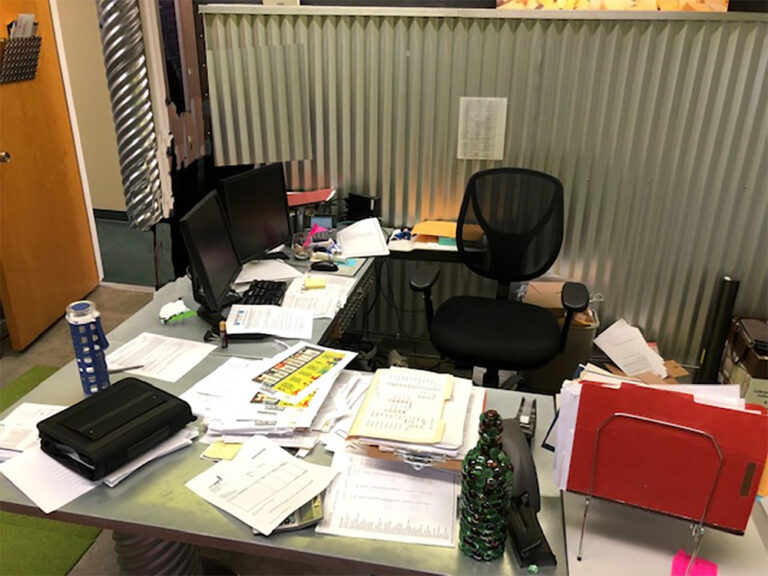
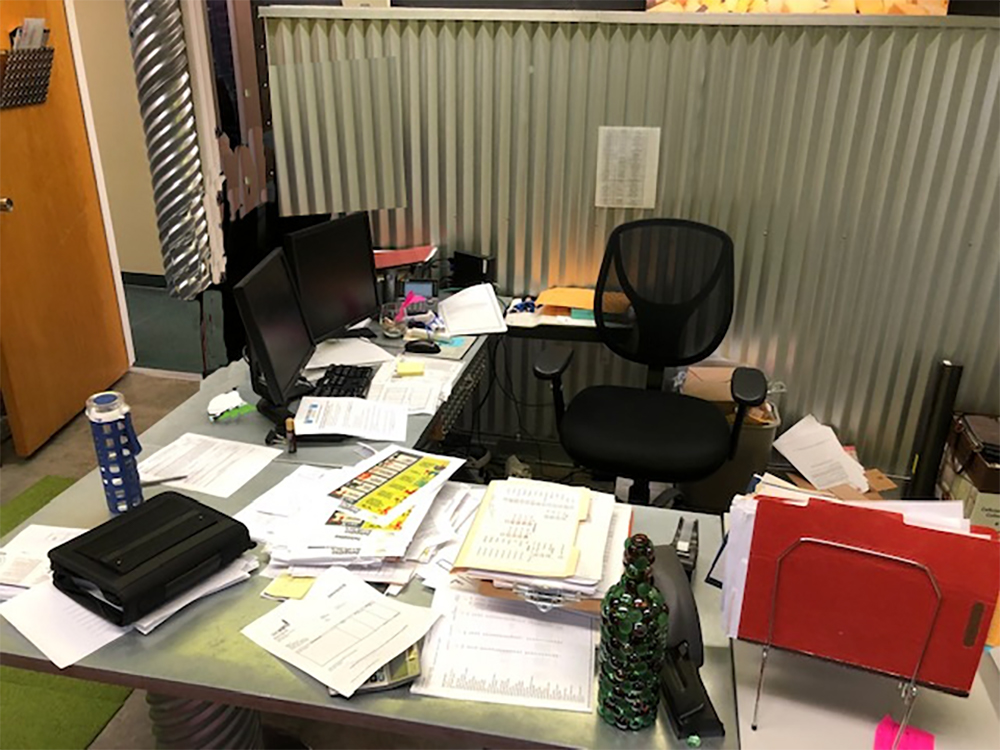
messy, cluttered professional desk

6 Habits Keeping You Disorganized—And How to Fix Them

hoarder kitchen messy cluttered

Do you do this? The habit of leaving everything out so you can find it later? Many people make this organizing goof. But the tips in this article will give you some great ideas and propel you to new habits to keep you organized.

Don’t worry, if you put it away, you will be able to find it – whatever it is.

Habit 1

I have no place to put this paper, so I’ll leave it on my desk.

This problem is easily solved. Decide a name that makes sense and make a file for this information, or deal with it (if it’s there as a reminder) by completing the task.

For organized files that are not too cramped, follow these two guidelines:

  • Be careful not to be too specific, or you’ll have files
  • with only one or two pieces of paper.
  • The same goes for file names that are too broad. The goal is to find your docs quickly, so more than 20 pieces of paper for a file hints that it needs to be divided into more specific subcategories. Try putting a few manilla files inside of a hanging file folder to accomplish this.

Habit 2

I leave everything out so I can find it later. I’m afraid if I put it away, I won’t find it again.

You might say, ‘I’m a visual person; I need to leave my stuff out so I can find it!’

It’s pretty obvious why this belief/ habit leads to a messy life. Does this mean all the pots and pans stay on the counter so you can find them? You’ll end up with no counter space to actually make meals.

What about art supplies, will they all be on your easel?  There won’t be enough room to create a piece of art.

For me, saying you’re a visual person is not a reason to leave everything out. I’m a visual person, and I put things away, almost obsessively.

What you’re saying is: I don’t have a system (a consistent ‘home’ for each type of item) for my stuff. So, if I put my headphones in this drawer, I worry I won’t find them again.

When you establish a system, either with my expertise or by doing it yourself, you will have the confidence that when you put items away, you’ll find them again.

We do this by establishing a system that makes sense to you.

And we use labels to mark shelves cabinets, and storage containers.

files

Habit 3

Inconsistent filing

‘I have multiple files for my receipts, paperwork, and even for projects. Sometimes I have to look in four different files for the paperwork I need, and sometimes I cannot find it at all.’

This points to a lack of a system in your filing. Organized files will save you so much time! An inconsistent system or imprecise filing habits can cause delays, inability to find documents, and even panic when you are unable to locate the info you need for a client or determine if you paid a certain bill or a vendor.

Not only that, but gathering info for taxes will be a nightmare.

A system is only as good as the maintenance you put into it!

Jenny Morin

It’s good to be proactive with filing, and to have only one place for each type of document. Decide at the beginning what will go where for organized files.

For example, say you have a very basic filing system, one file for each month, where you put most receipts and payments. Do you put the receipt for a project started in May but finished in June in the May folder or the June folder?

To avoid confusion and wasted time, decide at the outset whether to put receipts for that project in the starting month OR the finishing month. If you tend to forget, you can write it down.

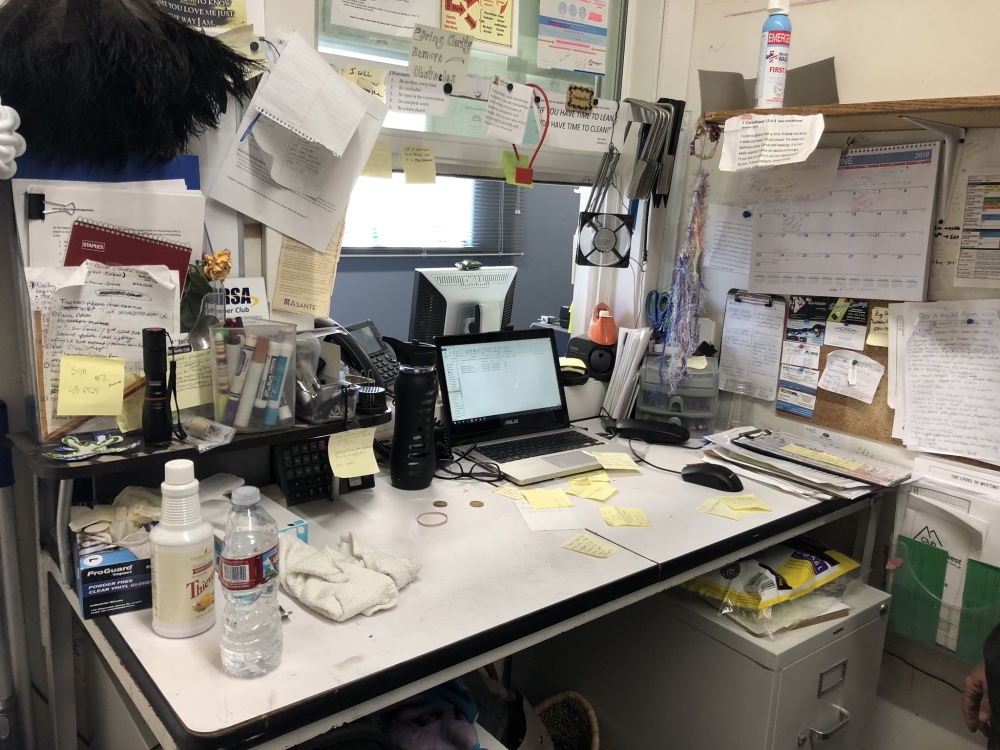
cluttered disorganized shared desk

 A commercial client I work with doesn’t have a consistent habit with his monthly files, so he currently must look in both month’s files to find what he needs. We are working on creating a better system

and filing habits for him. The search for the right receipt becomes more difficult and takes longer when there are 30 sheets of paper in each file.

But won’t I have to go through all my files to fix my filing system? you ask.

Yes, you will. Or you can hire an organizer! If you’re serious about being able to find documents, you’ll have to go through each file and move the ones that need to go into a different file. Organizers call this sorting, and it’s one of the main actions I take when I work with clients to organize files.

Tree in New Zealand in hobbiton

As for not putting off until tomorrow what can be done today:

“The best time to plant a tree was 20 years ago. The second best time is now.”

Chinese Proverb

The same goes for fixing a filing system. If you get motivated to make the fixes to your files, the time spent will pay off in less frustration and less time wasted looking for things in the future!

(This picture is the party tree from Hobbiton in New Zealand.)

Habit 4

‘I put my things in different places every time . . .

Then it takes me forever to find my keys, phone, purse or glasses when I need to leave the house.’

A recent client of mine, who owns a body shop, told me he scatters his tools all over the garage instead of having a ‘home’ for each tool. He realizes looking for tools is a big waste of his time, but he’s always done it this way—it’s his habit. So, we are working on some new habits and a system for his tools.

keys

It’s a sign of chronic disorganization when nothing in the house has a home.

We all lose our keys or phone from time to time, but if you feel your whole life is in chaos, it may be time to hire an organizer to help you create some order. Chronic disorganization doesn’t get better without help.

organized pantry

Habit 5

Not taking inventory before going shopping

I don’t know what I have in my:

  • Pantry, so I end up buying way too much of certain foods, then end up throwing away a bunch of expired food every year.
  • Garage, so I end up buying duplicate fertilizer, painting supplies, garden tools, mechanical tools, etc.
  • Office supply closet, so I buy way too much paper & Post-its, and sometimes run out of envelopes or other needed items.

It’s a great idea to take stock of what you have before you buy anything. I’ve had organizing clients who regularly go grocery shopping without checking what’s in their pantry first, then end up with food spoilage.

Years ago, I volunteered to clean out the supply closet for our Josephine County public library. Some of the paper & supplies were over 20 years old! We sorted all the like items together, labeled the shelves, and threw out the obsolete items. Once we were done the librarian told us she would save money on supplies since now she knew exactly what was in there.

Habit 6

Buying duplicates

‘I can’t find my ____________ when I need it, so I end up buying another one.’

Many times, this situation happens with tools in the garage or the shop. I had a friend in a networking group, a hoarder, who told me his basement was so clogged that he ended up buying a second table saw rather than excavate the table saw he already owned from the mess.

I am happy to say, he courageously cleared out his basement, bit by bit, and can find his tools now. He proudly showed me pictures of his progress.


To Conclude

I hope I’ve dispelled the myth that if you’re a visual person, you need to leave everything out to find it later. Visual clutter creates a low level of stress in our bodies; it is not good for us.

Another good habit to cultivate is to create organized files that make sense and consistently put documents away.

Being consistent is a big part of staying organized.

A system is only as good as the maintenance you put into it!

In other words, I can organize your office down to the last paper clip, but if you don’t put things away, you’ll soon find yourself in a mess again.

I hope the tips and stories in this article will help you get motivated to organize those little and big spaces in your life!

Yes, you do Have Time for Goals: 5 Ideas to Reach your Vision this year

I do have time for my goals

Yes, you can make ‘thyme’ for your Vision!

Hi everyone, I’ve been thinking a lot about time lately. Specifically, the VISION I have for this year, and how to make it all happen the way I picture it.

You have some great ideas and plans for 2021 too, and you may be realizing now that we are in mid-February that those goals are taking longer than you thought. At least that’s what I’m running up against.

Not enough TIME is the biggest obstacle that comes between you and your VISION for this year. So many people have told me that finding TIME for goals or working on a new habit is a challenge. Patience and perseverance come into play as well.  These qualities that come in handy when pursuing a long-range vision.

So I’m going to show you, using some concepts from my book’s chapter “Fitting in time for Organizing,” how you can consistently make room in your schedule to achieve those awesome goals and plans you made at the beginning of the year!

It doesn’t matter if your goal is organizing or working on a painting every week, these steps will show you how to make time for goals in your schedule.

Regarding the quality of patience, it helps to remind yourself often that projects and tasks usually take longer than you think.

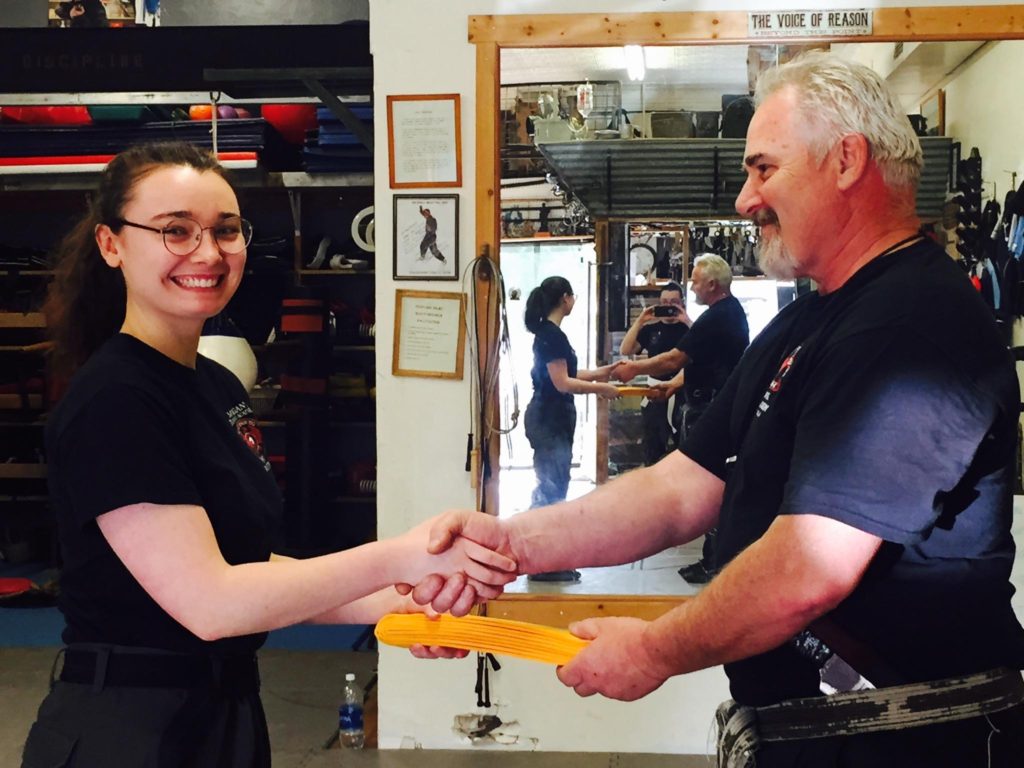
Kate and Sifu Wing-chun-do martial arts

Remember to chip away at your Vision this year.

Here’s a life lesson I learned from my self-defense teacher, Anthony Morgan, “Sifu”, a multi-level blackbelt and a “grandson” of Bruce Lee. (Bruce Lee trained the master who trained Morgan.) My daughter, Kate, and Sifu are pictured above.

Sifu said when he works on a big goal, he thinks about it this way. He has a small pick-axe necklace that reminds him of this principle. He imagines using the little pick-axe to chip away at his goals.

Why does my martial arts teacher use a small pick instead of a big one? Because he will get exhausted if his pickaxe is too big. So, he patiently chips away at his goals a little at a time and doesn’t get overwhelmed or discouraged by the huge-ness of the project. In this way, he has become an expert at self-defense and, as a contractor, has built many houses for clients.

Recipes for success:

I’m gonna just get it out in the open right now.  

The following ideas are the basics which I teach to a time coaching client who has activities he/she would like to make time for. As with anything, knowing the steps is not quite enough. Knowledge is just the first step.

What I mean is, consistently applying these steps on a daily or weekly basis will lead to success in reaching your goals. You need to actually take the steps / do the action, even when you don’t feel like it. That, for me, is always the hardest part in implementing a long-range project.

See my post ‘Is Procrastination holding you back?’  https://efficientspaces.org/procrastination-holding/

“Discipline is the bridge between goals and accomplishments.”

~ Jim Rohn

The third recipe for success: be accountable to someone. A friend, a coach, your spouse, a sibling. Without accountability, most people’s efforts fizzle out after a few months.

I rely on the calls with my business coach, and just knowing that I have to report my progress spurs me to action. To gather my courage to call the newspaper or reach out to the head of HR at a big company—these are hard for me, but I know she’s going to ask me, so that pushes me to make the call.

And on the flip side, when I work with time coaching clients, we set aside time each week for their big picture goal. For many of us, it’s usually just a matter of making the time to do a thing. And being consistent about working on it each day or each week. But that is easier said than done, isn’t it?

See my blog ‘You can do Anything for 30 minutes’ here.

Emily is reaching for goals

5 Strategies to make time for your goals

YOU CAN DO IT!

1. State your vision.

What do you want to accomplish or learn? Picture yourself actually achieving this goal. Take several minutes and truly envision what it will be like when you accomplish this amazing thing. Going back to this vision will motivate you to keep chipping away at it when times get tough.

  • Who will you be with? Who was instrumental in helping you achieve this amazing accomplishment?
  • what will people be saying?
  • how will you feel?
  • how will you celebrate?

2. Look at your schedule.

To find a regular time each week that has fewer interruptions, pick a day when you usually get less interruptions or regularly have less going on/ less meetings, less clients and less looming deadlines.

3. Examine your time preferences.

Figure out what time of day is best for you to tackle high-focus or difficult projects. If you work with your preferences, your experience will be much more pleasant.  Also, you’ll fit your new activity into the flow of your day naturally.  (Are you a Lark or an owl? See the Time Preferences Quiz at the end of the blog.) This will help you reach your vision for the year.

4. Work on your goal at a regular time.

I recommend the same time every day or the same day and time every week. Create a new habit that will get you where you want to go!

For example, say your goal is to complete a course on SEO so you can increase your website referrals. Thursdays at 10 am might be your golden hour.

5. Remind yourself.

  1. When working toward a new goal, it is important to remind yourself to do that new thing or add that new habit or practice into your life.

Use your calendar to remind you daily—especially if you are working on a new habit. I cover habits in depth using the cute and predictable Habit Rabbit to illustrate the best way to create a new habit or break an old habit.

Get organized quick by Jenny Morin
Get Organized Quick link: https://www.amazon.com/Get-Organized-Quick-Minutes-Organize-ebook/dp/B01KKY30TS

Or, if your plan is to work on your vision for the year on a weekly basis, set a reminder for that in your phone and your work calendar, then treat it like a doctor’s appointment. You wouldn’t cancel a dentist appointment to go to coffee or, read emails, would you?

Did this article help you? Did the questions cause you to think more deeply about your goal and how you’ll actually realize it? Would you benefit by having a coach keep you accountable to your goal?

To find out if coaching is for you, or to schedule a free time management assessment, please head to my website.

Time to find out what time of day you REALLY do your best work!

Time Preferences Quiz

Identifying your Energy cycles and sources

Write down your answers to the following questions.

  • Mornings are the best time for me to:
  • And the worst time for me to:
  • Afternoons are the best time for me to:
  • And the worst time for me to:

   My best time for focus work:

   My best time for low-focus tasks:

Thank you for reading, and have a great day!

Resources for you:

My blog ‘Goals: Aim for the Stars, Writing Goals you will Stick To’:

https://efficientspaces.org/goals-aim-stars/
Privacy Settings
We use cookies to enhance your experience while using our website. If you are using our Services via a browser you can restrict, block or remove cookies through your web browser settings. We also use content and scripts from third parties that may use tracking technologies. You can selectively provide your consent below to allow such third party embeds. For complete information about the cookies we use, data we collect and how we process them, please check our Privacy Policy
Youtube
Consent to display content from - Youtube
Vimeo
Consent to display content from - Vimeo
Google Maps
Consent to display content from - Google
Spotify
Consent to display content from - Spotify
Sound Cloud
Consent to display content from - Sound
Schedule a Free Call